
Casinos That Accept Visa Cards in the UK
 Available in GB
Contents
Visa can fund an account where supported, but the cashier, game catalogue and promotion rules each determine different parts of the experience.
Visa Deposits and Slot Play in the UK
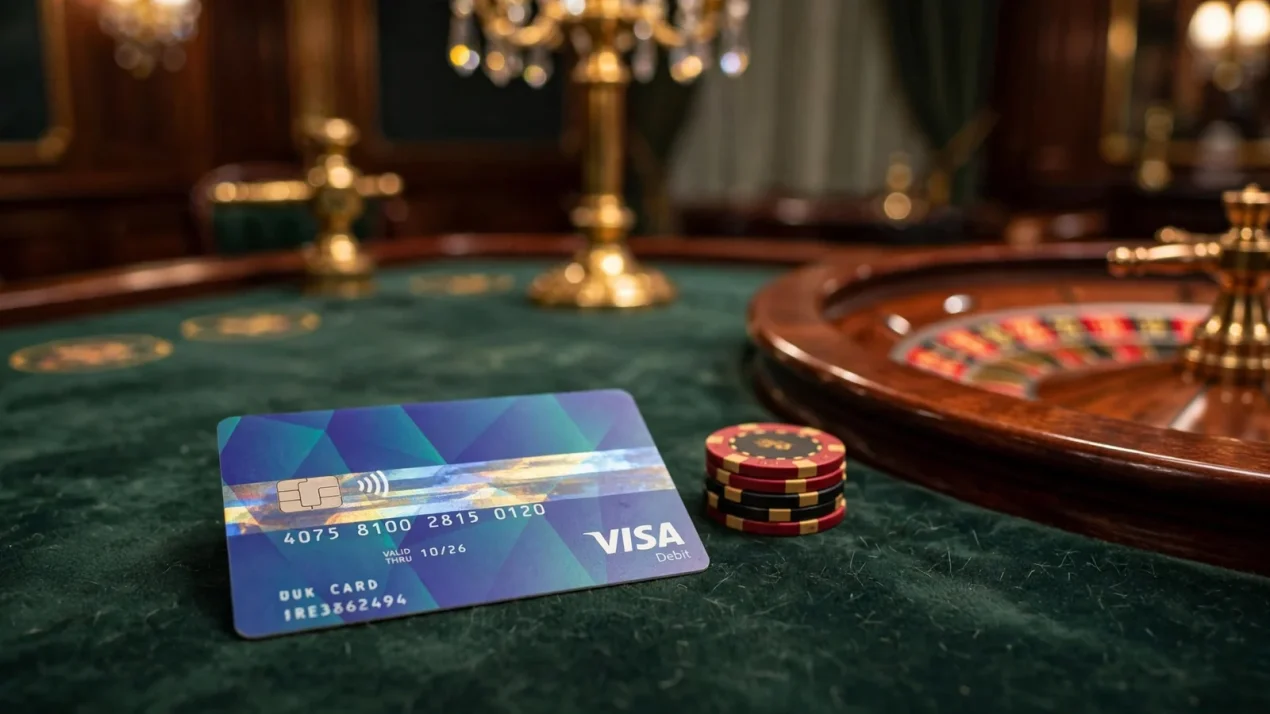
Visa is a payment network, while an online slot is a form of gambling offered through a casino account. The two serve different purposes: a card may provide a way to fund an account, but it does not determine which games the casino offers or how those games operate. UK casinos commonly accept debit cards, including Visa and Mastercard. That broad pattern does not establish that every casino supports every Visa card product, or that a particular card will be available for a specific account.
This distinction matters when considering searches for slots that can be played after a Visa deposit. The slot is not itself a Visa product, and Visa does not certify a game or set its play rules. Payment access and game access are separate questions, governed by the casino’s cashier and catalogue respectively. A casino account may provide access to online slots, but the presence of Visa as a payment option says nothing on its own about the range of titles, features or terms offered.
When choosing a UK casino that accepts Visa, check the payment details that matter to you before signing up. The payout speed listed here offers one point of reference for each operator.
1. EvoSpin
Payout speed: 1-3 business days
EvoSpin lists a payout speed of 1–3 business days.
2. Britsino
Payout speed: 1-3 business days
Britsino lists a payout speed of 1–3 business days.
3. SlotoSport
Payout speed: 1-3 business days
SlotoSport lists a payout speed of 1–3 business days.
4. x3bet
Payout speed: 1-3 business days
x3bet lists a payout speed of 1–3 business days.
5. Dieselwin
Payout speed: 1-3 business days
Dieselwin lists a payout speed of 1–3 business days.
6. Zombillion
Payout speed: 1-3 business days
Zombillion lists a payout speed of 1–3 business days.
7. Chanze
Payout speed: 1-3 business days
Chanze lists a payout speed of 1–3 business days.
8. Jetsetspins
Payout speed: 1-3 business days
Jetsetspins lists a payout speed of 1–3 business days.
9. BeOnBet
Payout speed: 1-3 business days
BeOnBet lists a payout speed of 1–3 business days.
10. SpinFormula
Payout speed: 1-3 business days
SpinFormula lists a payout speed of 1–3 business days.
Nor does a payment method establish the conditions attached to a bonus. Promotions have their own eligibility rules, which may relate to the account, the payment method or the games included. Visa acceptance should therefore not be read as evidence that a particular offer applies to a deposit made with that card. The same caution applies to claims about a “best” slot or a complete list: no ranking of games follows from the fact that UK casinos commonly accept Visa debit cards.
The regulatory setting is separate from both payment processing and the casino’s game catalogue. Online gambling is legal in the UK when provided by an operator holding the relevant UK Gambling Commission licence. Remote gambling licensees serving Great Britain consumers must hold that licence, and operators must verify a customer’s age before allowing a deposit. These conditions concern the provision of gambling services; a Visa logo does not replace them or demonstrate that a site is authorised to serve UK players.
For online slots, rules apply to the game experience regardless of how an account was funded. In Britain, autoplay is prohibited for online slot play. A player cannot use an automatic sequence that starts successive spins without a new action for each one. This restriction is not switched off by depositing with Visa, nor does another payment route create an exception.
WebMoney Casinos UK: What the Evidence Shows
Each online slot spin in Britain must also last at least 2.5 seconds. The minimum duration is a rule about the pace of play, not a payment-processing measure. A card transaction may be handled separately from the game, but it cannot shorten a spin below the required duration. Equally, a casino’s acceptance of Visa does not indicate that its slots follow different timing standards from those applying elsewhere in the regulated British market.
These distinctions help prevent several common misunderstandings. A casino that accepts Visa is not necessarily a casino with a particular slot, promotion or game feature. A slot available through a casino account is not necessarily eligible for every bonus. And neither the funding method nor a promotional label changes the rules on autoplay and spin duration. The relevant information belongs in separate places: payment methods in the cashier, game availability in the casino catalogue, offer conditions in the promotion terms, and operating status in the UK Gambling Commission’s public register.
The phrase “Visa slot” can consequently obscure what is being assessed. In practice, it may refer to an account funded with a Visa debit card and then used to access online slots. It does not describe a special category of game. The card supplies a possible route into the account; the operator’s licence, account controls and game rules determine the conditions under which gambling is offered.
This separation is also important when interpreting lists or promotional claims. A list of casinos with Visa support would concern payment availability, not the quality or compliance of their slots. A list of games would require evidence about the games themselves, not simply a payment logo. Without that distinction, payment information can be mistaken for an endorsement of a casino or a guarantee about its games.
Payment access and game access are separate: the presence of Visa as a payment option does not determine the range of slots, promotional eligibility, or the operator’s licensing status.
Visa therefore has a limited but clear role in the context of British online slots: it may be one of the debit-card methods accepted by a casino. It does not alter the statutory conditions for slot play, establish that a site is licensed, or guarantee a particular game or bonus. The deposit route and the gambling activity remain related parts of an account, but they are not interchangeable evidence.
What Visa Acceptance Means for Casino Deposits
Visa acceptance means that a casino’s payment system offers a route for a qualifying Visa card to fund an account. It does not mean that every Visa card will work at every site, or that a logo displayed on a page guarantees that the method is available to every customer. The deposit depends on the combination of the casino’s current cashier settings, the card product and the transaction being attempted.
A payment-method label is therefore an indication of possible compatibility, not confirmation of a completed deposit. A specialist review may list Visa and Mastercard among the methods shown for a casino, but the current UK cashier is the relevant place to establish whether Visa is offered for the account in question. Payment options can differ between sites and may change, so older descriptions should not be treated as a live statement of availability.
The distinction matters because “Visa accepted” can describe a broad network rather than every card product issued under that brand. A site may show Visa as a category while applying eligibility conditions to the specific card or transaction. The card’s appearance alone cannot establish that the cashier will accept it. Nor does acceptance at one casino establish acceptance at another, even where both display the same payment logo.
Casinos That Accept Solana in the UK: What to Verify
What happens when a deposit is made
A casino deposit has several points of compatibility. The site must present Visa as an available method; the card must meet the site’s requirements; and the payment must be processed successfully. A failure at any point can prevent the account balance from being funded. Seeing Visa in a general payment-information page is not the same as seeing it as an available option in the cashier.
This also separates the payment network from the casino account. Visa provides the card-payment route, while the casino’s cashier determines whether that route is enabled for the deposit. The transaction is not complete merely because the payment method has been selected: the final result is whether the casino records the funds in the account. A pending or unsuccessful attempt should not be interpreted as proof that all Visa transactions at that site are unavailable.
The same distinction applies to casino websites and apps. An app may provide access to the operator’s account and cashier, but its existence does not independently confirm that Visa deposits are supported. The payment method shown in the active cashier is more informative than a general description of the app or the casino.
Currency is part of compatibility
The account’s currency also affects how a deposit is handled. Specialist casino pages may state that pounds sterling are supported, but that statement should be checked against the account’s currency setting before a transaction is made. If the account is held in another currency, a Visa payment in pounds may involve conversion. The amount credited could then differ from the amount debited, depending on the currency arrangements involved.
If the casino account is held in a currency different from the card, a Visa payment in pounds may involve conversion, meaning the amount credited could differ from the amount debited.
This is not simply a question of whether the card can make a payment. The displayed deposit amount, the currency of the casino balance and the currency used by the card account all contribute to the result. Confirming the account currency before the first transaction can prevent an unintended conversion from being treated as part of an ordinary deposit.
Payment compatibility should also be understood within the UK licensing framework. Remote gambling licensees serving the British market must hold the relevant Gambling Commission licence. The presence of Visa in a cashier does not, by itself, establish the regulatory status of a casino; payment support and licensing are separate characteristics.
The practical meaning of Visa acceptance is consequently narrow: the casino has made a Visa route available under its current conditions, and the particular card and transaction must still be eligible. General payment lists can help identify a method worth checking, but they cannot substitute for the active cashier or confirm that a specific deposit will succeed. A clear distinction between advertised availability and transaction-level compatibility avoids treating a brand logo as a guarantee.
Can Visa Be Used at UK Online Casinos?
Yes. Debit cards are a commonly accepted way to pay at UK online casinos, and Visa is among the card networks used for this purpose. Mastercard is also widely represented. This establishes that Visa can be used for casino payments in the UK, but it does not mean that every casino accepts every Visa card or that the method will appear in every account’s cashier.
Casinos That Accept USDC in the UK: Payment Checks
Acceptance is determined at the individual site. A casino may list Visa as a supported method in general information while its current cashier presents a narrower set of options. Availability can also depend on the particular card product. The practical distinction is between a general statement that a site takes Visa and confirmation that the specific card is eligible for the intended transaction.
A specialist casino review may report Visa among the methods listed by a site, but such listings are not a substitute for checking the operator’s live cashier. Payment arrangements can change, and a page describing a method does not establish that it remains available to UK customers at the time of use. The cashier is the relevant place to confirm whether Visa is currently offered and whether the card can be selected.
This means that the answer to whether UK online casinos accept Visa is positive at the market level, but less definite for any particular account. A site can accept Visa debit cards in principle while a transaction is unavailable because the card product is not supported or the cashier does not offer that method in the account’s circumstances. The Visa name on a card alone does not confirm acceptance.
The same distinction applies to descriptions of “Visa casinos”. That label indicates a payment option associated with the site, not universal compatibility across all cards carrying the Visa mark. Nor does general acceptance establish that a specific payment will be approved. The operator’s cashier and the card’s eligibility determine whether the option is usable in practice.
Do
- Check the live cashier for current Visa availability
- Confirm if your specific card product is eligible
Don’t
- Rely on general payment-information pages as a guarantee
- Assume the Visa logo confirms universal card compatibility
For UK customers, the relevant check is therefore not only whether a casino mentions Visa, but whether the current deposit screen offers it for the account and recognises the card being used. Where that confirmation is absent, a broad statement about Visa acceptance is insufficient to establish availability. This is why a list of sites naming Visa should be treated as an initial indication rather than a guarantee that every Visa card will work.
In short, Visa is a recognised casino payment method in the UK, and debit cards are commonly accepted. The answer for an individual casino remains conditional: the method must be available in its current cashier, and the particular card product must be eligible.
Visa Debit Cards, Credit Cards and UK Gambling Rules
The Visa name identifies the card network, not the source of the funds. A Visa debit card draws on money held in a linked bank account, whereas a Visa credit card accesses borrowing from the card issuer. That distinction matters for gambling payments in the UK: the rules do not treat every card bearing the Visa logo as an interchangeable way to fund an account.
Credit-card payments for gambling have been banned since 14 April 2020, and the prohibition has not been relaxed. Remote gambling licensees must not accept credit-card payments for gambling. The restriction also covers credit-card funding routed through a money service business, so changing the route does not make a credit card an eligible gambling payment method. It is the underlying source of funds, rather than the card network’s branding, that determines whether the transaction falls within the restriction.
Citadel at UK Casinos: How to Check Payment Support
Debit cards sit on the other side of this regulatory boundary. UK casinos commonly accept debit cards, including Visa and Mastercard, but that general pattern does not mean that every card product, account or transaction will be accepted by every operator. In particular, a Visa debit card should not be confused with a Visa credit card simply because both display the same network mark. The card’s classification and the source from which the payment is drawn are material.
The distinction also applies to digital payment routes. UK rules prevent an operator from accepting a wallet payment where the wallet permits credit-card funds to be used for gambling. A wallet is therefore not a way to bypass the credit-card restriction. The relevant question remains whether credit is funding the gambling transaction, even if a service stands between the card and the casino account.
For a casino accepting Visa in the UK, the practical implication is that “Visa accepted” should not be read as permission to use any Visa-branded card. Acceptance of Visa debit does not establish acceptance of Visa credit, and the latter cannot be used for gambling payments at a UK-licensed casino. A payment option’s appearance in a general description may also fail to distinguish between card products; the regulatory rule applies regardless of how broadly a method is described.
This boundary is separate from the rules governing casino games or the terms attached to a promotion. A payment method cannot change the legal status of a credit-card-funded gambling payment. Likewise, a label such as “Visa payments” does not override the restriction. Any interpretation of card acceptance must preserve the distinction between a debit transaction funded from an account and borrowing made available through a credit card.
Credit Card Ban
Credit-card payments for gambling are prohibited in the UK; only debit cards, including Visa debit, are eligible for funding casino accounts.
Accordingly, references to online casinos accepting Visa are accurate only when they are understood in context. Visa debit may be an available payment route, subject to the operator’s terms, while credit-card payments for gambling remain prohibited. The Visa logo alone does not establish which type of card is eligible.
Visa Payments and the Rules for Online Slots
Visa is a payment method, not a setting that changes how an online slot operates. UK casinos commonly accept debit cards, including Visa and Mastercard, but payment acceptance does not determine a game’s features or the rules that apply once play begins. A Visa deposit therefore provides no exemption from Britain’s restrictions on online slots.
Autoplay is prohibited for online slots in Britain. A game cannot be set to run successive spins automatically, even if the account was funded with a Visa card and the player has sufficient balance. Each spin must be initiated separately. This restriction concerns the operation of the game, rather than the way money entered the account.
A spin must also last at least 2.5 seconds. The minimum applies to the duration of an online slot spin; it is not a payment-processing condition and does not vary according to whether a deposit was made by Visa. A cashier may confirm that a card payment has been accepted, but that does not alter the timing requirement for subsequent play.
Stake limits are a separate part of the same regulatory framework. The maximum stake for an online slot game cycle is £5 for customers aged 25 and over, and £2 for those aged 18 to 24. The £5 limit for adults took effect on 9 April 2025. These limits concern the amount staked in a game cycle, not the amount deposited by card. A deposit balance cannot be treated as permission to exceed the applicable stake cap.
Casinos That Accept Giropay in the UK: Payment Guide
The distinction matters when considering references to Visa slots or casinos that accept Visa deposits. Such wording describes a payment route or the availability of card deposits, not a special category of slot with different play rules. Mobile access does not change the position either: a slot played on a phone remains subject to the same prohibition on autoplay and the same minimum spin duration.
Nor does the payment method determine whether a particular slot is available or what bonus terms apply. Those are separate matters governed by the operator’s game catalogue and promotional conditions. Visa acceptance alone establishes none of them.
For online slots in Britain, the relevant rules attach to the game and the regulated gambling service, not to the card brand. Payment access and permitted play should therefore be understood as distinct questions: a card may be accepted for deposits while every slot session remains subject to the same statutory restrictions.
Other Ways to Fund a Casino Account
Alternatives to Visa at UK online casinos include e-wallets, open banking, bank transfers and prepaid vouchers. Their roles differ: a method that can add funds may not also support withdrawals, and the cashier’s terms determine whether it can be used for both.
PayPal is an e-wallet valued for speed and convenience. Specialist casino-payment reviews describe it as a popular option, but report that it may be excluded from bonus eligibility. That is not a fixed rule across operators; the promotion’s terms should be checked for the specific payment method. Skrill and Neteller are also offered by some sites. Specialist reviews report that these e-wallets are often excluded from promotions, so their presence in a cashier does not establish that a deposit will qualify for an offer.
PayPal
An e-wallet valued for speed and convenience, though it may be excluded from some bonus eligibility.
Open Banking & Transfers
Methods that can support instant deposits and fast withdrawals, depending on the casino and route.
Paysafecard
A prepaid voucher used for deposits only, providing no direct route for receiving payouts.
Open banking links a payment to a bank account, while a bank transfer moves funds through the banking system. Specialist payment reviews report that these methods can support instant deposits and fast withdrawals at many sites. Availability and processing depend on the casino and the payment route, however, so those descriptions do not establish the timing of an individual transaction. Bank transfer instructions and the cashier should be checked before use.
Paysafecard works differently from a bank-linked method or e-wallet: it is a prepaid voucher for deposits and is deposit-only. It therefore does not provide a direct route for receiving a casino payout. This distinction matters when comparing alternatives, since a convenient way to fund an account may not form a complete deposit-and-withdrawal option.
Some UKGC-licensed casinos also accept Apple Pay for deposits. As with other methods, availability depends on the particular site and the payment options displayed in its cashier. A method’s general presence in the UK market does not mean it will be available at every casino.
The relevant comparison is therefore not simply whether an alternative is available. It is whether the method supports the intended transaction, how its terms treat bonuses, and whether it can be used for withdrawals as well as deposits. Wallet payments must not route credit-card funds into gambling: UK remote gambling rules prohibit both direct credit-card payments and credit-card funding passed through a money service business. A wallet’s name alone does not establish that a payment route is permitted.
Interac Casinos in the UK: What Payment Access Is Confirmed
Checking Visa Availability and Keeping Payment Details Consistent
A reference to Visa on a casino’s payment page is a starting point, not confirmation that every Visa card can be used. Specialist reviews may list Visa and Mastercard among a site’s payment methods, but availability in the UK and eligibility of a particular card product need to be confirmed in the casino cashier. Payment options can differ between operators and may change, so a general payment-method description should not substitute for the live deposit screen.
The cashier is the most direct place to establish whether Visa is currently offered for the account. It should identify the available payment route and display any relevant instructions before a transaction is submitted. If Visa appears only in a general list elsewhere on the site, but not among the account’s deposit options, that does not establish that the card can be used. The same caution applies to a Visa debit card: the brand alone does not determine whether the casino’s payment system accepts that specific product.
The account details and card details also need to correspond to the same customer. A difference in the name or other basic ownership information can prompt avoidable questions or delay a transaction. Using an account held in one person’s name with a payment route belonging to someone else can make it harder to establish who controls the funds. Consistency across the casino account and payment method therefore reduces a straightforward source of transaction friction.
Visa Deposit Check
- Confirm Visa is displayed in the live cashier
- Establish that the specific card product is eligible
- Ensure casino account and payment route belong to the same customer
- Verify that billing information matches issuer records
Where the cashier requires cardholder or billing information, those details should reflect the card and its issuer’s records. Incorrect or outdated information can lead to a declined payment or a request for clarification. This is a practical accuracy check, not a guarantee that a transaction will be approved: the issuer, casino and payment processor may each apply their own checks.
A consistent payment route can also make the account’s transaction history easier to follow. The cleanest arrangement is often one named account used for both deposits and withdrawals, where the casino supports that route for each purpose. The presence of Visa in a deposit list alone does not establish that it is available for payouts, so the cashier’s stated options should be checked separately. This distinction matters even when the same card has worked for a previous deposit.
Payment security depends on using the casino’s genuine cashier and keeping card information within the payment flow provided there. Card details should not be sent through informal messages or shared with another account holder. Any unexpected request for information should be assessed through the operator’s official account or support channels rather than answered through an unverified contact.
Before submitting a Visa payment, the relevant checks are therefore specific: confirm that Visa is currently displayed in the cashier, establish that the card product is eligible, and ensure that the casino account and payment route belong to the same customer. These checks reduce avoidable mismatches without implying that a listed payment method will work for every card or account.
Casinos That Accept InstaDebit in the UK
Visa Withdrawals: Source-of-Funds Checks and Timing
A Visa deposit does not establish that a casino will send a withdrawal back to the card. The cashier’s withdrawal terms determine which payout routes are available, and the route can depend on the payment method used to fund the account. UK anti-money laundering rules generally require payouts to be returned to the original payment source. This closed-loop approach helps the casino confirm the destination of funds and meet its obligations.
Where a Visa withdrawal is supported, the process has distinct stages. The casino first reviews and approves the withdrawal request. It may also complete KYC checks, particularly before processing a first withdrawal. Only after the operator releases the payment does the card-payment route affect how quickly the funds reach the account. A delay at the casino’s approval stage is therefore different from a delay in payment delivery.
A specialist review describes card deposits as capable of arriving instantly, while a payout to a card may take several business days. That contrast is not a fixed timetable for every Visa card or casino: the operator’s processing policy, verification status and payment arrangements all matter. Claims of instant Visa withdrawals should consequently be checked against the specific cashier terms rather than inferred from the speed of a deposit.
The first withdrawal may take longer when verification is still outstanding, according to specialist reviews of casino payment processes. Requests for documents or clarification can add an approval step before the payment is sent. Once approved, the payment method itself may still require processing time. A published estimate should therefore be read as a description of the full process only if it clearly states whether casino review and payment delivery are both included.
UK anti-money laundering rules generally require payouts to be returned to the original payment source to help casinos confirm the destination of funds.
For a casino with Visa deposits and withdrawals, the key distinction is between card acceptance for funding and card eligibility for payouts. A Visa logo in a deposit list does not, on its own, confirm that Visa is a withdrawal option. The cashier’s withdrawal page and the operator’s terms are the relevant places to establish whether funds can be returned to the card, whether another original source must be used, and how the operator describes its processing stages.
Deposit Limits, Fees and the Cost of Using Visa
The minimum required for a Visa deposit is set by the casino and may differ from the threshold for another payment method. Specialist casino reviews place reported minimum deposits in the £10–£20 range, but that is not a universal tariff. A particular cashier may set a different minimum, so the displayed amount is the relevant figure when making a transaction. A low-value deposit should not be assumed to be available merely because Visa is listed as an accepted method.
Maximum deposits can also vary. The cashier may apply a transaction cap, while separate daily or monthly limits may depend on the payment method or account status. These are processing limits, not measures of what is affordable. UK Gambling Commission rules require remote gambling operators to ask new customers to set a financial limit before their first deposit and to make account-level limit controls accessible. The financial limit is a customer protection control; it does not change the cashier’s minimum or maximum.
The total cost may involve more than a casino charge. Specialist payment reviews identify possible costs from the casino, payment provider, card issuer or bank, as well as currency conversion and network charges. Whether any apply depends on the transaction and the relevant terms. A conversion rate can also include a spread, so a transaction without a visible flat fee is not necessarily the least costly option.
AstroPay at UK Casinos: How to Check Acceptance
The account currency should be checked before a first transaction. If the casino account and card transaction use different currencies, conversion may affect the amount ultimately charged. Comparing the casino’s fee information with the card issuer’s terms and the displayed exchange rate gives a more complete view than considering the deposit amount alone.
Visa acceptance therefore does not establish one standard minimum, maximum or fee. The cashier’s current limits and the costs disclosed by the casino and payment providers determine the terms for a specific deposit. A deposit bonus, where offered, is a separate matter: its eligibility conditions should be read independently rather than inferred from the use of Visa.
Visa Acceptance and GamStop Status Are Separate Questions
Visa acceptance describes a payment option; GamStop status concerns self-exclusion. The two are not interchangeable, and the presence of Visa in a casino’s cashier does not show whether that casino is covered by GamStop. UK casinos commonly accept debit cards, including Visa, but this general pattern does not establish which individual sites offer Visa alongside a particular GamStop status.
Casinos That Accept UKash in the UK: What’s Confirmed
A claim that a casino is not covered by GamStop therefore needs to be checked independently of its payment methods. Likewise, a site described as accepting Visa cannot be assumed to be outside the scheme. Payment information and self-exclusion information answer different questions and may change separately.
Legal status is a further distinction. Remote gambling licensees serving consumers in Great Britain must hold the relevant UK Gambling Commission licence, regardless of where the operator is based. Online gambling is legal in the UK only through licensed and regulated sites. A site’s Visa availability, or a statement about its GamStop status, does not by itself establish that it is authorised to serve UK customers.
This matters when interpreting labels such as “Visa casino not on GamStop”. Such wording combines two separate attributes, but neither attribute proves the other. A reliable assessment requires current, site-specific information about payment acceptance and scheme coverage, as well as confirmation that the operator holds the required licence. Without those separate checks, the label alone is not a sound basis for judging a casino’s status.
Are Visa and Mastercard deposits definitely debit cards?
No. UK casinos commonly accept Visa and Mastercard debit cards, but a network logo does not guarantee that every card product will work; check the casino’s cashier for your card.
What is the fastest withdrawal method for UK casinos?
PayPal, open banking services and debit cards linked to fast payout systems are generally among the quickest. The casino’s approval process and your verification status also affect how soon funds arrive.
Which payment methods are accepted in Great Britain?
Options include Visa and Mastercard, PayPal, bank transfers and open banking, plus e-wallets such as Skrill and Neteller at some casinos. Some sites also offer Apple Pay or Jeton; check the cashier for current availability.
What is the current minimum deposit?
The minimum deposit usually starts at £10–£20, depending on the payment method.
Which method has the lowest fees?
There is no universally cheapest method. Compare casino and provider charges, any bank or network fees, and the exchange-rate spread for your transaction.
Is Skrill available?
Yes, Skrill is available at some UK-friendly casino sites and is a common deposit option. It may be excluded from promotions.
Do UK casino withdrawals require verification?
Casinos may need to complete verification before paying out, and first withdrawals can take longer while checks are completed. Having a fully verified account can help avoid delays.
This material was created by the Ninewin UK Guide team.
Related posts

UK Crypto Casinos With No KYC: Rules and Limits

TRON (TRX) Casino Comparison for the UK
