Ninewin KYC and verification
 Available in GB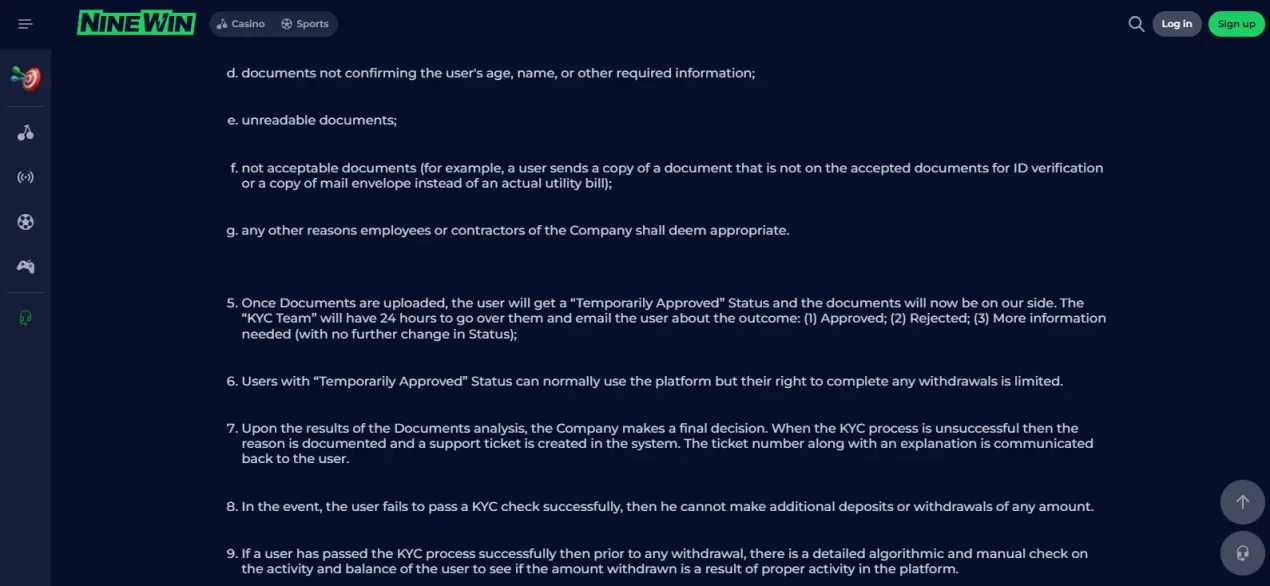
Contents
Identity checks before cashout
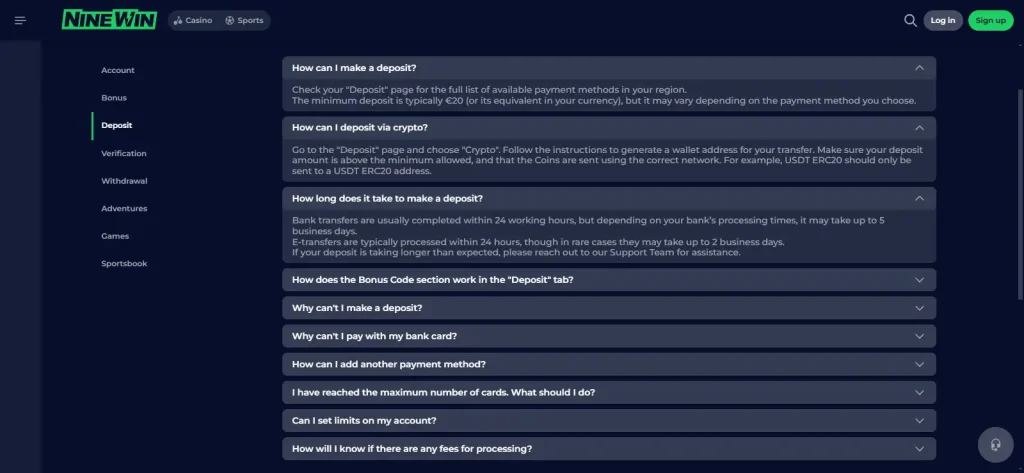
Ninewin’s official KYC policy says it may request documentation to determine a user’s identity and location, and it can restrict service, payments or withdrawals until identity is sufficiently determined. The current policy lists passport or ID evidence, proof of address not older than six months, and possible additional identity, selfie or bank-card evidence. It also states that, once documents are uploaded, the KYC team has 24 hours to review them and email the outcome.
That 24-hour figure is a document-review window, not a promise that an account or withdrawal will be fully approved within 24 hours. Ninewin uses a risk-based process, so the evidence requested can vary. Separate withdrawal processing and payment-method settlement can still apply after KYC. The Ninewin KYC policy lists the document categories, while withdrawal processing and payment-method settlement remain separate stages.
Why Ninewin uses SDD, CDD and EDD
Ninewin says it takes a risk-based approach to due diligence and ongoing monitoring. The policy divides checks into SDD, CDD and EDD. These labels describe different levels of scrutiny rather than three steps every player is guaranteed to complete in order.
| Level | How Ninewin describes it | What that means for a player |
|---|---|---|
| SDD | Simplified due diligence for extremely low-risk transactions that do not meet required thresholds. | A lighter risk profile does not remove the operator’s ability to request evidence later. |
| CDD | Customer due diligence used as the standard for verification and identification in most cases. | This is the ordinary identity-checking layer described by the policy. |
| EDD | Enhanced due diligence for high-risk customers, large transactions or special cases. | Additional evidence can be requested when the risk profile calls for a deeper review. |
The useful point is that KYC is not a one-size-fits-all checklist. The policy allows the evidence to depend on risk, transaction and customer type. Ninewin can request different document categories depending on the risk level, so not every player should expect the same request.
The official Ninewin document categories
The current policy separates basic identification data from documents that support identity and location. The relevant categories are the ones named in Ninewin’s KYC policy rather than generic casino document lists.
| Evidence category | Current official policy | What it is used to establish |
|---|---|---|
| Primary identity | Current passport or ID card. | Identity and age-related details tied to the account. |
| Address | Document confirming the permanent residence address, not older than six months. | Current location or residence information. |
| Additional identification | Possible additional national identity evidence. | Extra identification where the risk-based check requires more support. |
| Selfie evidence | Possible photo of the user with an open passport. | Additional comparison between the person and identity document. |
| Payment evidence | Possible front image of a bank card with the policy’s specified visible details. | Additional evidence connected to the payment instrument. |
These are possible categories, not a promise that every Ninewin user will be asked for all of them. The policy explicitly ties requests to the screening type. If the account receives a specific request, follow the instructions presented through the official account or support route instead of uploading unrelated documents.
Prepare documents for readability and consistency
The KYC policy makes identity and location the core goals of verification. In practice, that means your evidence should be current enough for the category, readable and consistent with the information attached to the account. Do not alter an image to make it look cleaner, and do not send a substitute document merely because it is easier to find.
It is also worth separating preparation from submission. You can know which document categories Ninewin may request without sending them before the account asks for them. That reduces unnecessary sharing of sensitive information while still letting you prepare for a first withdrawal.
If the request is unclear, use Ninewin’s official support route. Do not send identity files to an address, social account or messenger that cannot be tied back to the operator. The broader registration covers account readiness without duplicating this document-level detail.
What the 24-hour KYC window actually means
Ninewin’s policy says that after documents are uploaded the account receives a temporary approval status and the KYC team has 24 hours to review the documents and email an outcome. The policy describes three possible outcomes: approved, rejected or more information needed. That 24-hour period applies to the KYC team’s review after upload.
It should not be stretched into a claim that the entire account journey will be finished within one day. If more information is requested, a second cycle can follow. A separate withdrawal review can also exist after the identity documents are accepted. The 24-hour figure therefore belongs to the KYC team’s review of uploaded documents, not to the end-to-end cashout journey.
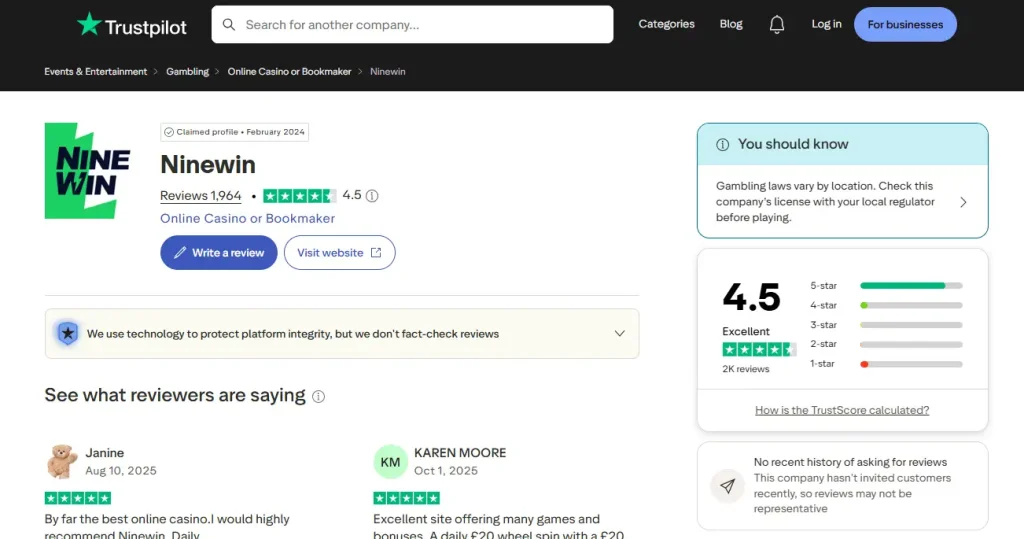
The distinction becomes especially important when reading payout reviews. A reviewer may describe a delay without separating document review, operator cashout processing and payment settlement. Separate KYC review, operator cashout processing and payment settlement when reading a payout complaint or positive review.
Verification can limit withdrawals before the account is cleared
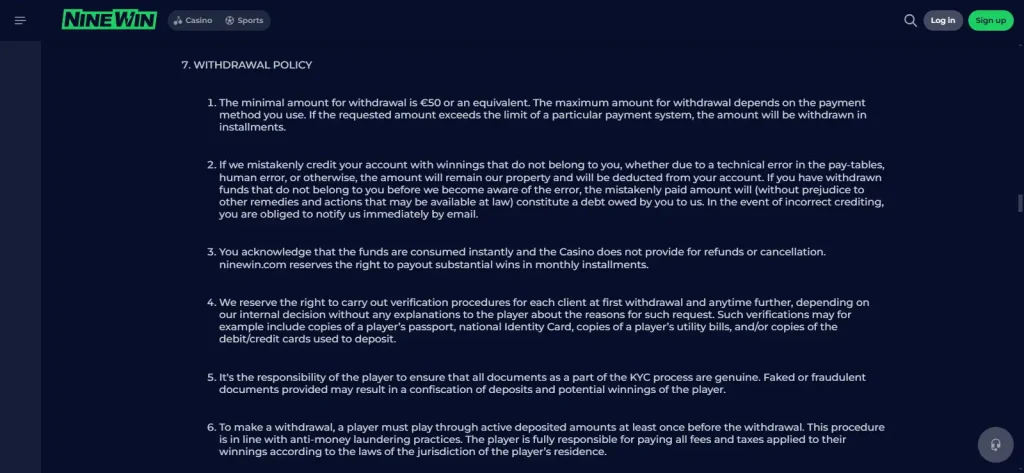
Ninewin’s KYC policy says the operator may restrict the service, payment or withdrawal until identity is sufficiently determined. It also states that users with the temporary approval status can normally use the platform while their right to complete withdrawals is limited. The main terms likewise connect cashout processing with verification.
For a player, the practical sequence is simple: do not treat a visible account balance as proof that a withdrawal can skip identity checks. If KYC is requested, complete the requested verification through the official account channel before assuming the payout clock has started in full.
Once KYC is no longer the blocker, the separate withdrawals explains the current operator processing window and why payment-method settlement time is a different stage. The wider cashier covers the payment routes themselves.
A preparation checklist for Ninewin verification
- Keep primary ID available. The official policy lists a current passport or ID card as the main identification-document category.
- Check your address evidence date. Ninewin’s policy specifies proof of permanent residence address not older than six months.
- Use account details that match your evidence. Consistency reduces avoidable questions when identity and location are compared.
- Do not assume the base documents will always be enough. A risk-based review can request additional ID, selfie/passport or payment evidence.
- Submit only through an official route. Identity files are sensitive and should not be sent to an unverified third party.
- Read the 24-hour statement correctly. It is the KYC team’s review window after upload, not a guaranteed withdrawal completion time.
- Keep payment timing separate. A cleared identity check does not remove the operator and payment-method stages described on the cashout page.
What not to infer from a KYC request
A request for documents does not by itself prove that something is wrong with the account. Ninewin’s policy explicitly uses a risk-based system and allows different levels of due diligence. The amount of evidence can therefore vary without every user being subject to the same process.
Likewise, KYC should not be used as shorthand for UK Gambling Commission protection. Ninewin’s verification policy is the operator’s own published process. The regulatory context page explains the separate licensing question and should be used for any claim about regulatory coverage.
Finally, do not add unofficial document types because they are common at other casinos. Ninewin’s policy names the core categories, while an account-specific request can ask for additional evidence under the risk-based process.
Where KYC requirements appear
Ninewin’s KYC policy contains the document categories and the 24-hour review statement. Read the policy and the request shown in the account before uploading sensitive evidence, because account-specific requirements can vary.
Registration readiness, cashier choice and cashout timing are separate parts of the account journey. KYC covers identity and address checks, while payment and withdrawal sections cover the transaction stages.
For the wider product, payment and account picture, see the Ninewin review.
What to prepare for Ninewin identity checks and first withdrawals
The current Ninewin KYC policy supports a focused preparation plan: keep valid identity evidence available, have recent address evidence, and be ready for additional ID, selfie or payment evidence if a risk-based review requires it. Treat the published 24-hour figure as the KYC team’s document-review window after upload, not as a guaranteed cashout time. A first withdrawal can still involve separate operator processing and payment-method settlement after identity checks. The best way to reduce avoidable friction is to keep account information consistent and follow only the document request shown through Ninewin’s official verification and support routes.
This material was created by the Ninewin UK Guide team.
Related posts
Ninewin withdrawals: limits, timing and the cashout process
Ninewin withdrawal reviews and common payout issues