
UK Casino Sites That Accept Credit Cards: The Rules
 Available in GB
Contents
UK-licensed casinos cannot accept credit cards for gambling, but other payment methods and their limits vary.
Why UK Casinos Cannot Take Credit Card Deposits
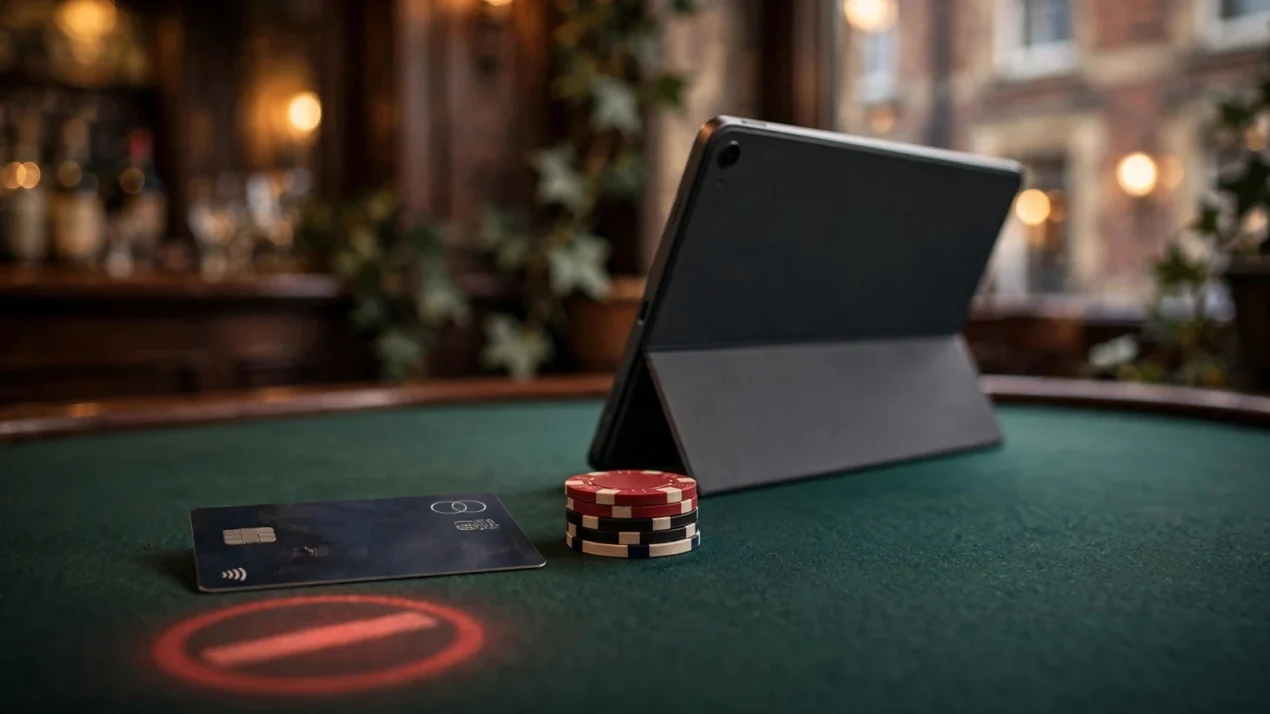
Credit cards are not an accepted way to fund gambling at UK-licensed casinos. The restriction is a regulatory rule, not a preference set independently by each casino. A remote gambling licensee serving the British market cannot accept credit-card payments for gambling, so a casino cannot make an exception by choosing to allow such deposits.
The ban took effect on 14 April 2020. It remains in force: the rule has not been relaxed since its introduction. As a result, a UK-licensed casino cannot lawfully accept a credit-card deposit for casino play, whether the transaction is made through its website or another remote service it provides.
This distinction matters because a payment facility may support card transactions for other purposes without making credit-card gambling permissible. The relevant issue is whether the funds are being used for gambling, not simply whether a card can be entered into a payment form. The rule governs the payment activity accepted by the licensee.
The restriction applies within the UK regulatory framework. Remote gambling licensees serving customers in Great Britain must hold the relevant Gambling Commission licence, and the credit-card rule forms part of the conditions under which they operate. It is therefore not a voluntary policy that a licensed casino can reverse in response to customer demand.
When considering a UK casino site, check its payment terms as well as whether its listed payment options suit you. The entries below provide a stated payout-speed estimate, but do not specify credit-card acceptance.
1. EvoSpin
Payout speed: 1-3 business days
EvoSpin has a stated payout speed of 1–3 business days. No details are provided here about credit-card acceptance.
2. Britsino
Payout speed: 1-3 business days
Britsino has a stated payout speed of 1–3 business days. No details are provided here about credit-card acceptance.
3. SlotoSport
Payout speed: 1-3 business days
SlotoSport has a stated payout speed of 1–3 business days. No details are provided here about credit-card acceptance.
4. x3bet
Payout speed: 1-3 business days
x3bet has a stated payout speed of 1–3 business days. No details are provided here about credit-card acceptance.
5. Dieselwin
Payout speed: 1-3 business days
Dieselwin has a stated payout speed of 1–3 business days. No details are provided here about credit-card acceptance.
6. Zombillion
Payout speed: 1-3 business days
Zombillion has a stated payout speed of 1–3 business days. No details are provided here about credit-card acceptance.
7. Chanze
Payout speed: 1-3 business days
Chanze has a stated payout speed of 1–3 business days. No details are provided here about credit-card acceptance.
8. Jetsetspins
Payout speed: 1-3 business days
Jetsetspins has a stated payout speed of 1–3 business days. No details are provided here about credit-card acceptance.
9. BeOnBet
Payout speed: 1-3 business days
BeOnBet has a stated payout speed of 1–3 business days. No details are provided here about credit-card acceptance.
10. SpinFormula
Payout speed: 1-3 business days
SpinFormula has a stated payout speed of 1–3 business days. No details are provided here about credit-card acceptance.
The term “UK casino” can be used loosely, so the regulatory status of a site is important when interpreting claims about payment acceptance. A casino operating under a UK licence is subject to the domestic rule. A claim that credit cards are accepted does not, by itself, establish that the site is a UK-licensed casino or that the transaction complies with the UK framework.
For the same reason, the date of the ban is not merely historical background. The change made in 2020 continues to determine what UK-licensed casinos may accept for gambling deposits. References to older payment arrangements do not override the current restriction, and the passage of time has not restored credit-card deposits as an option.
The practical position is therefore clear at the level of the rule: UK-licensed casinos cannot take credit-card deposits for gambling. The restriction concerns the funding of gambling, rather than whether credit cards remain available for ordinary purchases elsewhere. Payment routes that might appear to involve a card require separate consideration; the ban cannot be set aside simply by changing how a deposit is described.
Can a Credit Card Be Used for Online Gambling in the UK?
No. A credit card cannot be used to fund gambling at a UK-licensed online casino. The restriction applies to real-money casino deposits, not just to payments made at a physical venue. It therefore covers online casino games, including slots, when the payment is for gambling.
The rule has been in force since 14 April 2020 and has not been relaxed. In practical terms, a credit card is not an eligible deposit method at a UK-licensed casino. A payment attempt may be declined, and a casino cannot treat a credit-card deposit as acceptable simply because the card issuer or payment interface appears to permit the transaction.
This is distinct from asking whether a payment card can be used at all. UK casinos commonly accept debit cards, including Visa and Mastercard. A debit card draws on funds in a bank account, whereas a credit card borrows against a credit facility. The distinction matters: acceptance of a card network does not mean every card carrying that network’s logo is suitable for gambling deposits.
For someone asking whether a credit card can be used at an online casino in the UK, the answer is therefore no, even if the cashier displays familiar card branding. The relevant question is the type of card and the permitted use of the payment, not merely whether the site accepts card payments in general. A debit card may be listed as an option; a credit card is not a lawful substitute for it at a UK-licensed casino.
The same principle applies when the intended activity is online gambling outside traditional casino games. A credit card cannot be used to place a gambling deposit merely because the transaction is made through a website or app rather than in person. Nor does choosing a particular game change the payment rule: a credit card cannot be used to fund slot play at a UK-licensed casino.
Credit Card Ban
UK-licensed casinos cannot lawfully accept credit-card deposits for gambling due to regulatory rules in force since 14 April 2020.
This can make payment pages appear less straightforward than a simple list of card brands suggests. Visa and Mastercard operate across different card products, including debit and credit cards. Their names identify payment networks, not an assurance that every product bearing those names is eligible. The casino’s acceptance of debit cards does not extend to credit cards, and a credit-card logo or general reference to card payments should not be read as permission to use borrowed funds for gambling.
The rule is about depositing money for gambling, rather than about whether a person owns or can use a credit card for other purchases. A credit card may remain usable for ordinary retail spending, but that does not make it an available means of funding a casino account. If the payment is intended to support gambling, the card’s credit status remains relevant.
Accordingly, the direct answer to whether a credit card can be used to gamble online in the UK is no at a UK-licensed casino. Debit cards are a separate category and are commonly accepted, but card-network branding alone does not establish which product is being used. The practical distinction is between a permitted debit-card deposit and a prohibited credit-card payment for gambling.
What Payment Methods Are Available at UK Online Casinos?
The payment menu at a UK-facing casino can include several distinct types of method, but a method’s presence on a general information page does not establish that it is currently available to every customer. A specialist review of a group of casino websites reported seeing Visa and Mastercard, bank transfers, e-wallets and several cryptocurrencies among the methods mentioned. That is evidence of what those pages listed, not a complete or permanent catalogue of UK payment options.
UK Casinos Accepting EcoPayz: Payment Guide
Debit cards are a familiar route at UK casinos, with Visa and Mastercard among the card brands commonly accepted. The word “card” does not, however, make a payment method interchangeable with another card product. UK-licensed casinos cannot accept credit-card payments for gambling. The websites in a specialist review listed Visa and Mastercard, but current UK availability and eligibility for a particular card product need to be confirmed in the casino cashier. A logo or brand name alone does not establish that a credit card can be used.
Other payment categories include bank transfers and e-wallets. PayPal, Skrill and Neteller are examples of e-wallet brands named in connection with casino payments; individual site support varies. Open banking services also appear in the broader range of payment routes. These categories should not be treated as a single uniform option: the provider, account arrangement and casino’s cashier determine what can be used for a specific account.
Some casinos also offer prepaid vouchers. Paysafecard is a prepaid product used for deposits only, so its presence does not mean that it can also receive withdrawals. Apple Pay is another possible deposit route: some UKGC-licensed casinos accept it for deposits. Neither brand should be assumed to appear at every casino or to have identical functionality across sites.
Skrill remains one of the more frequently cited deposit methods at UK-friendly casino sites in 2026, according to a specialist review. Jeton is reported by a specialist review as available at a handful of UK online casinos in 2026. These are time-sensitive observations, not guarantees of availability at a particular operator. Payz may also appear in older payment references under its former name, EcoPayz; the service rebranded in 2022.
Debit Cards
Commonly accepted via Visa and Mastercard networks, drawing funds directly from a bank account.
E-wallets
Digital services like PayPal, Skrill, and Neteller that provide a separate account-based route.
Bank Transfers
Direct movements of funds from a bank account, including open banking services.
Prepaid Vouchers
Products such as Paysafecard used for deposits only, not for withdrawals.
Cryptocurrency requires particular care in interpreting payment lists. A specialist review reported several cryptocurrencies on the websites it examined, but that observation does not establish that a UK-licensed casino accepts them for gambling. The payment method must be considered in the context of the operator’s licensing status and the route through which funds are handled; a list of currencies on a page is not proof of UKGC-authorised availability.
For a general overview, the main categories are therefore cards, bank transfers and open banking, e-wallets, prepaid vouchers, mobile-wallet payments and, on some reviewed websites, cryptocurrency. Their inclusion on a list describes a possible method, not a universal feature. The cashier is the relevant place to establish which choices are active for a given account and which card products are eligible.
Credit Card Casino Alternatives and Their Trade-offs
A credit card is not an available route for gambling deposits at a UK-licensed casino. The practical comparison is therefore between payment methods that may be accepted instead, each with different implications for access to funds, withdrawals and promotional eligibility. Availability varies between operators, so a method’s presence on one site does not establish that it will be offered elsewhere.
Debit cards
Debit cards are a direct alternative for customers who want to pay from a bank account. UK casinos commonly list Visa and Mastercard debit cards, although the cashier determines whether a particular card product is eligible. A debit card does not provide borrowing in the way a credit card does: the payment is taken from the associated account, subject to the bank’s own checks and controls.
The main trade-off is that card acceptance for deposits does not by itself confirm that the same card can receive a withdrawal. The operator’s payment terms and cashier should be checked for the route available to the account. A debit card may also be less suitable where a customer wants to separate gambling transactions from ordinary spending, since payments appear against the linked bank account.
PayPal
PayPal can provide a separate account-based route rather than entering card details for each transaction. A specialist casino review describes it as a popular option for speed and convenience, but that assessment does not establish that every operator offers it or that every account can use it.
Promotions require particular care. The same kind of review notes that PayPal deposits may be excluded from bonus eligibility. That condition is operator-specific: the terms attached to a particular offer, rather than the payment method’s general reputation, determine whether a deposit qualifies. A deposit made through PayPal can therefore be usable for play while failing to meet a promotion’s payment conditions.
Open banking and bank transfers
Bank payments can move funds directly from an account, without relying on a card transaction. A specialist payment review reports that open banking and bank transfers can support immediate deposits and relatively quick withdrawals at many sites. This is a report about available services, not a guarantee for every casino, bank or account.
Open banking and bank transfers can support immediate deposits and relatively quick withdrawals at many sites.
The route may suit someone who prefers to authorise payment through their banking service. Its usefulness depends on the operator’s supported connection and the bank account involved. Where the casino offers more than one bank-payment option, the names can refer to different processes; the cashier’s description and terms establish which one is actually available.
Prepaid vouchers
Paysafecard is a prepaid voucher for deposits only. It may help separate the amount set aside for a casino transaction from a bank-card payment, but it is not a complete deposit-and-withdrawal route. Since withdrawals cannot be made to the voucher, another permitted method may be needed for payouts. This limitation can make it less straightforward than a method that supports both sides of an account’s transactions.
E-wallets
Skrill and Neteller are offered at some sites, according to specialist casino payment reviews, but those reviews also report that these wallets are often excluded from promotions. Neither point should be treated as a condition applying uniformly across operators: the cashier and promotion rules need to be considered together.
An e-wallet can keep casino transactions within a separate payment account, but that separation does not remove the need to confirm withdrawal availability or bonus terms. Across all alternatives, the relevant comparison is not simply which logo appears on a payment page. It is whether the method supports the intended transaction and whether its conditions fit the deposit and any offer being considered.
Deposits, Withdrawals and Payment Limits
A deposit and a withdrawal are separate stages, even when they use the same payment account. A payment may appear in the casino balance before a payout can be requested, while a withdrawal can involve additional processing after the request is submitted. The amount of time shown in a cashier should therefore be read as applying to a particular stage, not necessarily the whole transaction.
Wirecard at UK Casinos: How to Check Payment Support
A specialist casino review describes card deposits as potentially instant, while a payout may take several business days. That difference reflects more than the payment network: withdrawal processing includes the casino’s own approval, and the time can increase if checks are still outstanding. First withdrawals may take longer while verification is completed, according to a specialist review. These descriptions are not a guarantee of timing for a particular account or payment route.
UK anti-money laundering rules generally require winnings to be returned to the original payment source. This can affect how a withdrawal is arranged: a casino may send funds back to the method used for the deposit rather than allowing an unrelated destination to be selected. Where the original route cannot receive a payout, the operator may need to use another permitted method or request further information. The available route depends on the casino’s procedures and the payment provider’s capabilities.
Minimum deposits are not necessarily identical across a casino’s payment options. A specialist casino review reports that some minimums fall within the £10–£20 range, depending on the method selected; the cashier remains the relevant place to confirm the requirement for a particular transaction. A displayed minimum is also distinct from a maximum. Maximum deposits may be set per transaction, per day or per month, and can vary by payment method and account status, as described in a specialist review. These are operator controls, not a single market-wide threshold.
Do
- Check the live cashier for current method availability
- Verify if a method supports both deposits and withdrawals
- Set account-level financial limits before the first deposit
Don’t
- Assume a card logo guarantees credit card eligibility
- Rely on general lists for specific transaction limits
- Confuse account gambling limits with payment provider limits
Account-level gambling limits are separate from payment limits. UKGC rules require remote gambling operators to prompt new customers to set a financial limit before their first deposit and to make account-level limit controls accessible. Those controls govern how much a customer chooses to spend; they do not establish the amount a bank, payment provider or casino will permit in one transaction. A payment can therefore be declined even where it falls within a customer’s chosen gambling limit, or be accepted by a provider but blocked by an operator’s own controls.
The balance displayed in a cashier should not be treated as evidence that withdrawal will be immediate or use the same route without conditions. The casino’s approval process, account verification and the original-source requirement all affect the payout stage. Payment limits can also change according to the selected method or account status, so figures shown for one route should not be assumed to apply to another. For a casino site described as accepting deposits by card, this transaction detail does not make a credit card an eligible gambling payment at a UK-licensed casino: the deposit and withdrawal mechanics apply only to permitted methods.
The UK Credit Card Gambling Ban and Payment Routes
The UK credit-card gambling ban concerns how the gambling payment is funded, not merely the name displayed at checkout. A payment does not become permissible simply because it passes through another service before reaching a casino. Remote gambling licensees cannot accept credit-card payments for gambling when they are routed through a money service business, and they cannot accept wallet payments where credit-card funds can be used for gambling.
UK Casino Sites That Accept Skrill: Payments Explained
This matters because payment chains can obscure the original funding source. A casino deposit may appear to come from a transfer service or a digital wallet, while the balance used for that transaction was funded with a credit card. The intermediary does not change the character of the funds for this purpose. The restriction is intended to cover that route as well as a direct card payment.
Wallets require a similar distinction. The relevant question is not only whether a casino lists a wallet as a payment option, but whether the wallet permits credit-card funds to be used for gambling. Where it does, a wallet transfer cannot be used to sidestep the restriction. A wallet funded from another eligible source is a different payment route, though the casino still has to apply its own payment controls.
The same principle applies to money service businesses. Sending credit-card funds through a transfer or payment service before they reach a gambling account does not make them acceptable for a deposit. The payment route may involve more than one provider, but the restriction still applies to credit-card funding. Changing the intermediate step is therefore not a lawful workaround for a UK-licensed casino.
The rule is not a recent change. The regulator brought the credit-card gambling ban into force on 14 April 2020, and it has not since been relaxed. Its continuing effect is that a payment route involving credit-card funds cannot be used to fund gambling at a UK-licensed casino, whether the card is presented directly or sits behind an intermediary.
This does not mean that every wallet or payment service is prohibited. The restriction concerns credit-card funds being used for gambling, rather than the mere existence of a wallet account or a transfer service. The funding source and the service’s permitted use both matter. If a service allows credit-card money to reach a gambling transaction, a different screen or payment label does not remove that issue.
Attention: Using a digital wallet or money service business as an intermediary does not make credit-card funding permissible for gambling at UK-licensed casinos.
For operators, the obligation is to prevent prohibited credit-card payments from reaching a gambling account through these routes. For a player, the practical distinction is between a payment method and the funds behind it: a wallet or intermediary is not automatically a neutral buffer. The legal position turns on whether credit-card funds are being used for gambling, not on how many steps appear between the card account and the casino.
The ban therefore reaches beyond the visible card-entry form. A direct card option is only one possible route, and removing it would not address deposits funded through an intermediary. The rule also covers those indirect routes when credit-card funds remain the source of the gambling payment.
Checking Payment Availability Before Depositing
A payment logo on a casino page is an indication of a listed method, not confirmation that every account or card carrying that brand can be used. A specialist review of payment options reports Visa and Mastercard among the methods shown on the supplied sites, but current UK availability and eligibility depend on what the casino’s cashier accepts. The cashier is therefore more relevant to a particular transaction than a general list on a promotional or information page.
This distinction matters when a search for a UK casino accepting credit cards leads to a card logo. UK-licensed casinos cannot accept credit-card payments for gambling. The presence of Visa or Mastercard branding does not mean that a credit card is permitted, nor does it establish that a particular card product is supported. Card type and payment purpose must be distinguished: the listed brand alone does not identify whether the transaction is eligible.
The cashier should be checked before a payment is initiated. It shows which methods the account can select at that time and may clarify whether a card method is available for the intended transaction. If a method is absent or the displayed terms do not resolve eligibility, its availability should not be inferred from an old review, a logo, or a general statement elsewhere on the site. Payment options can change, so information attached to an account at the point of use is the pertinent evidence.
Currency is another account-specific detail. A specialist review of the supplied pages reports GBP support, but that does not establish the currency selected for every account. The account currency should be confirmed before the first transaction. If a payment is made in a different currency, conversion may occur, and the amount debited can differ from the amount displayed in pounds. Checking the account setting and the cashier’s currency information first helps identify this issue before funds are moved.
The same check should cover the payment method’s stated conditions, including whether the available option applies to deposits, withdrawals, or both. A method appearing in a general payment list does not by itself demonstrate its full function for an individual account. These details are distinct from whether a gambling payment is legally acceptable: a cashier listing cannot override the restriction on credit-card payments for gambling at UK-licensed casinos.
Check Payment Eligibility
- Verify the operator’s UK Gambling Commission licence
- Confirm the card type is debit, not credit
- Check the live cashier for active payment methods
- Confirm the account’s selected currency (e.g., GBP)
- Review if the method is eligible for current promotions
A reliable compatibility check therefore relies on the live cashier, the account’s selected currency, and the specific card or payment product—not merely on a brand name. Where those details do not agree with a general site description, the more cautious interpretation is that eligibility has not been established.
Does a Non-GamStop Site Change the Credit Card Rule?
A casino described as “not on GamStop” is not thereby exempt from the UK restriction on credit-card payments for gambling. GamStop relates to self-exclusion; it does not determine whether a remote gambling licensee may accept a particular payment method. The label alone therefore says nothing conclusive about a site’s licence or its payment rules.
The regulator introduced the credit-card gambling ban on 14 April 2020, and it has not been relaxed. For a UK-licensed casino, a credit card cannot be accepted as a gambling deposit simply because the site is outside GamStop. Nor does a site’s choice of self-exclusion arrangements alter the requirements that apply to a UK licence.
Regulatory status depends on whether the operator holds the required UK Gambling Commission licence, not on where its website is hosted or how it describes its relationship with GamStop. Remote gambling licensees serving the British market must hold the relevant licence. A site operating outside that system is not made UK-licensed by being accessible to British residents, and its payment practices should not be treated as evidence that the UK rule has changed.
Citadel at UK Casinos: How to Check Payment Support
This distinction matters when a site advertises itself as a non-GamStop casino accepting credit cards. Such wording may describe the site’s claimed availability or payment offer, but it cannot establish that the operator is authorised to serve the British market. If a site accepts credit-card gambling payments, that claim does not make the arrangement permissible for a UK-licensed operator. Equally, an apparent offer from an unlicensed site does not turn it into a lawful UK payment option.
A non-GamStop label also should not be read as a recommendation for someone who has self-excluded. Self-exclusion and payment eligibility are separate matters: neither the presence nor absence of a particular self-exclusion scheme changes the credit-card restriction for UK licensees. Searching for a way to combine non-GamStop access with credit-card deposits does not identify an exception to the rule.
The relevant checks are the operator’s regulatory status and the payment conditions that apply to the account. A current UK Gambling Commission licence is required for a casino legally serving customers in Great Britain; the licence number can be checked against the Commission’s public register. A site’s marketing label, payment logos or claims about card acceptance cannot substitute for that check. The governing distinction is therefore not “GamStop versus non-GamStop”, but whether the operator is UK-licensed and subject to the continuing credit-card restriction.
Payment Security, Ownership Checks and Fraud Controls
Payment checks at a UK-licensed casino are concerned not only with whether a deposit can be processed, but also with who owns the casino account and the payment account. Using details and a payment route belonging to the same customer can reduce avoidable problems when a transaction is reviewed. A difference in names or account information may prompt further checks; it does not, by itself, establish why the details differ.
Using a single named account consistently for both deposits and withdrawals reduces avoidable friction and ownership questions during verification.
The standard payment route is often the clearest when one named account is used consistently for deposits and withdrawals. This supports a straightforward record of where funds came from and where any eligible return should go. It is not a guarantee that a transaction or withdrawal will be approved: the operator may still need to complete identity and account checks.
Returning funds to the original payment source is a common anti-fraud and anti-money-laundering control. This is why a casino may not treat a different withdrawal destination as an interchangeable substitute. Where the original route cannot receive a payment, an alternative may be considered, but it can require additional verification. The process depends on the operator’s controls and the circumstances of the account.
KYC checks can include confirming identity and establishing that the payment method belongs to the account holder. Verification may be requested before a withdrawal, and first withdrawals can take longer while checks are completed. These controls are separate from the question of which deposit methods a casino lists: a payment option appearing in the cashier does not remove ownership or verification requirements.
For searches concerning credit-card casino sites in the UK, security checks do not make a credit card an acceptable gambling payment method at a UK-licensed casino. Payment details must still comply with the rules applying to remote gambling, while ownership checks address the separate risk of unauthorised or unexplained transactions.
A consistent account record therefore matters for both fraud prevention and the handling of funds. If a payment route belongs to someone else, or if the account details do not align, the operator may need to investigate before processing a transaction. Keeping the casino account and payment route in the same person’s name reduces the chance of basic ownership questions creating avoidable friction, without removing the operator’s obligation to carry out appropriate checks.
Online Slots and Credit Card Payments in Britain
The payment rule for online slots is the same as for other forms of gambling: a credit card cannot be used to fund play at a UK-licensed casino. The regulator’s prohibition took effect on 14 April 2020 and remains in force. A slot game’s format does not create an exception, so a credit-card deposit is not an eligible way to start a session.
Ninewin payment methods: deposits, withdrawals and currencies
This payment restriction is separate from the rules governing how online slots may be played. One concerns the source of gambling funds; the other sets conditions for the game itself. A permitted payment method does not alter the slot rules, and compliance with those rules does not make a credit-card deposit acceptable.
In Britain, online slot autoplay is banned. Each spin must last at least 2.5 seconds, so a game cannot automatically run successive spins on a player’s behalf. These requirements apply to slot play rather than to deposits or withdrawals. They should not be confused with the separate restrictions on how a gambling account can be funded.
Stake limits also apply by age. For customers aged 25 and over, the maximum stake per game cycle is £5. For those aged 18 to 24, it is £2. The £5 limit for all adults took effect on 9 April 2025. These limits describe the amount that may be staked on a slot game cycle; they do not define a deposit limit or change which payment methods are permitted.
The practical distinction is therefore between payment eligibility and play conditions. A slot may be available in a casino, but that does not mean every means of funding the account is allowed. Equally, the minimum spin duration, autoplay prohibition and stake limits govern the play experience, not the card used to make a deposit. In the UK, credit-card payments for gambling remain prohibited even when the intended activity is online slots.
A licensed operator must apply the relevant requirements to its gambling services. The rules are not dependent on whether a slot is played on a computer or another device, nor on the title or style of the game. Searches for slots that accept credit cards do not alter the regulatory position: credit cards are not an authorised funding route for slot gambling at UK-licensed casinos.
Why must withdrawals return to the deposit method?
Returning funds to the original payment source is a common anti-fraud and anti-money-laundering control. Using a different route may require additional verification.
What is the fastest withdrawal method for UK casinos?
PayPal, open banking services and debit cards linked to fast payout systems are generally among the quickest options. The casino’s approval process and your account verification also affect how soon you receive the money.
Which payment methods are accepted in Great Britain?
Common options include debit cards such as Visa and Mastercard, PayPal, bank transfers and open banking. Some sites also accept prepaid vouchers, e-wallets such as Skrill or Neteller, and Apple Pay; check the casino cashier for current availability.
Why can a fast payout casino still delay my withdrawal?
The casino must approve the withdrawal, and first withdrawals may take longer while verification is completed. An account that is not fully verified can also slow payment.
Are fast casino withdrawals guaranteed?
No. Withdrawal speed depends on the casino’s approval process, whether your account is verified, and the payment route; bank transfers can also be affected by cut-off times and weekends.
Are Visa and Mastercard deposits definitely debit cards?
No. Visa and Mastercard are payment networks used for both debit and credit cards, so check that the card is a debit card. UK-licensed casinos cannot accept credit-card deposits for gambling.
Is Skrill available?
Yes, Skrill is available at some UK-friendly casino sites and remains a common deposit option. It may be excluded from promotions.
This material was created by the Ninewin UK Guide team.
Related posts

UK Crypto Casinos With No KYC: Rules and Limits

TRON (TRX) Casino Comparison for the UK
